INSA Video Summaries
AI-generated English translations of new videos. A no-sign-up video summary & translation page
 📺 Aktuelle Umfragen: Sonntagsfrage, Potential, Blau-Schwarz oder Grün-Rot-Rot, Bedeutung von Medien
German Voting Intentions and Media Influence: Opinion Trend Analysis from October 26, 2026
▼
This analysis covers the opinion trend survey dated October 26, 2026, presenting four areas: the Sunday question, the maximum potential of each party, the hypothetical choice between two coalition camps, and the expected future importance of various media. The data is presented with comparisons to the last federal election and breakdowns by demographic and partisan groups.
■ Sunday Question and Parliamentary Majorities
- Current vote shares for the parties, including those polling below the 5% threshold
- Possible coalition majorities and how each alliance would be composed
■ Maximum Potential of the Parties
- Ranking of the parties' maximum possible support
- Where the additional untapped percentage points would come from
■ The Two-Camp Alternative
- Respondents' choice between a green-red-red and a blue-black government coalition
- Differences by gender, region, age group, and party affiliation
■ Media of the Future
- Which media are expected to gain or lose importance in respondents' view
- Which media are expected to remain about the same
This is useful for viewers who follow German politics, elections, and media trends. Watching gives a clear picture of how public opinion is currently distributed and how it differs across social groups, helping you interpret future polling developments.
 📺 Aktuelle INSA-Umfragen: Sonntagsfrage, Sichere Stimmen, Einfluss von Umfragen, Gerechtigkeitsindex
INSA Opinion Trend Analysis for October 19, 2026: Sunday Question, Poll Influence, and a New Fairness Index
▼
This update presents the INSA opinion trend dated October 19, 2026, covering three areas: the Sunday question with parties' certain votes, the influence of election polls on voting decisions, and a newly developed fairness index based on ten surveyed topics.
■ The Sunday Question
- Coalition arithmetic under different alliances and the five-percent threshold
- Certain votes each party can rely on, compared with total poll shares
■ Polls and Voting Behavior
- How respondents perceive survey results and their relevance to their own choice
- Differences across demographic groups and party affiliations
■ Fairness Index
- Topics surveyed, ranging from opportunities for advancement to the treatment of minorities
- How each topic is rated as fair or unfair, and the overall index level
It is suited for viewers interested in German polling data and survey methodology, and helps them follow how poll figures, coalition scenarios, and fairness perceptions are presented. Further sociodemographic breakdowns of the fairness index are available to channel members.
 📺 Aktuelle Umfragen: Sonntagsfrage, Potential, Unterstützung Ukraine, Entwicklung der Parteien | INSA
Insa Poll Trend Analysis for October 12, 2026: Sunday Question, Ukraine Support, and Party Expectations
▼
This episode of the Insa opinion trend analysis, dated October 12, 2026, examines three questions in a single session. It reports the current Sunday question results and coalition arithmetic, voters' positions on financial support for Ukraine, and citizens' expectations about how the parties will develop in the months and years ahead. The data presented comes from a survey of respondents recorded at the time of the fieldwork.
■ Sunday Question and Party Potential
- Party scores, changes versus the previous reading, and the share of votes going to parties below the five-percent threshold
- Coalition totals for several possible government combinations and the threshold needed for a parliamentary majority
- The maximum potential measure, showing how many respondents would consider voting for each party, with comparisons across the main political forces
■ Support for Ukraine
- Respondents' split between stronger, unchanged, and reduced financial support
- How these attitudes differ among each party's supporters
■ Expectations for Party Development
- Respondents' outlook for the future strength or weakness of the individual parties
The episode is aimed at viewers who follow German politics and polling data. It offers a compact way to grasp the current opinion landscape and the direction in which voters expect it to move. Those who want further sociodemographic detail, the interactive constituency map, and a fuller potential analysis can subscribe to the Insa Abo mentioned at the end.
 📺 Aktuelle INSA-Umfragen: Sonntagsfrage, Negative Sonntagsfrage, Zuckersteuer, Investitionen...
Insa Poll Trend Analysis from October 5, 2026: Voting Intentions and Key Policy Issues
▼
This video presents an analysis of the Insa opinion trend dated October 5, 2026, covering five distinct topics in German politics and society. Each topic is explained with the latest survey findings, making it easy to follow the current state of public opinion.
■ Election Polling
- Results of the standard voting intention question and how the gap between the leading parties has developed
- The "negative Sunday question" on which parties respondents would fundamentally never vote for, organized by party groups
- What the negative poll reveals about each party's voter base and its implications for campaigning
■ Public Spending Priorities
- Levels of support for investing more in education, health, and defense
- How supporters of the different parties view defense spending in particular
■ Society and Policy Questions
- Public reaction to a possible visit by Pope Leo XIV to Germany next year
- Preferences between an opt-out and the current opt-in system for organ donation
- Attitudes toward a tax on sugary drinks and where party supporters stand on it
The video closes with information on the presenter's subscription offering, including additional survey data, an interactive constituency map, and a potential analysis tool.
This content is aimed at viewers interested in German politics, polling data, and current social debates. Watching it provides a structured overview of where public opinion currently stands across several policy areas and how voter groups differ, without requiring prior familiarity with the surveys.
 📺 Sonntagsfrage, Trennung West-/Ostdeutschland, Abbau Ungerechtigkeit, Kinder in Deutschland | INSA
INSA Opinion Trend Analysis – September 28, 2026: Voting Intentions, Justice, Reunification and Birth Rates
▼
In this edition of INSA News, five topics from the INSA opinion trend dated September 28, 2026 are examined. The analysis covers the federal Sunday question including each party's additional electoral potential, how voters position themselves politically, and which party is trusted most to reduce state-caused injustice. It also addresses attitudes toward a possible new separation of West and East Germany, as well as opinions on having more children in Germany.
■ Federal Voting Intentions & Party Potential
- The gap between AfD and CDU/CSU, and how different coalition majorities score
- Voters' self-placement left of centre, in the centre, or right of centre by party
- Each party's additional potential and where those voters currently stand politically
■ Trusted Party for Reducing Injustice
- Which party respondents trust most on this issue, including regional and voter-group differences
■ Reunification and Its Perception
- Satisfaction with German reunification on its 36th anniversary, and views on a possible new division
■ Children as the Future of the Country
- Whether more children being born in Germany would be welcome, broken down by gender and political orientation
- How many respondents would personally like to have more children, including among 30- to 39-year-olds
This is aimed at viewers who follow German politics and current polling data. It offers a compact overview of the latest survey findings and the political cleavages they reveal, helping viewers place these issues in context before the next week's update.
 📺 Sonntagsfrage, sichere Stimmen, wer soll Bundeskanzler Merz im Amt nachfolgen? | INSA
Insa世論調査(2026年9月21日)で読み解くドイツ連邦政治:支持率・首相後継問題・有権者の失望度
▼
Insaの最新調査(2026年9月21日付)をもとに、ドイツ連邦政治の現在地を4つのテーマで整理し、数値の背景にある構造を解説します。州選挙の結果と結びつけながら、世論調査の読み方を具体例とともに提示します。
■ 世論調査の最新動向
- 全国レベルでの政党支持率と主要政党間の差の推移
- 「確実票(安全票)」に焦点を当てた各党の動員力の比較
- 州選挙の結果が5%阻止条項とどう結びつくか
■ 首相が退任した場合の対応
- 有権者が望む解決策の選択肢とその分布
- 与党・野党ごとの支持者層による意見の違い
■ 次期首相候補への期待
- 連邦レベルで名前の挙がる候補者についての有権者の意向
- 与党支持者に限った場合の候補者別的支持状況
■ 選挙期間中の失望感
- 現行の立法期間において最も失望させたとされる政党の傾向
連邦政治や世論調査の動向を追う方向けに、直近の調査結果とその読み取り方を短時間で把握できる構成です。視聴後は、支持率の変化や首相後継をめぐる議論を、より多角的に検討するための基礎知識が得られます。詳細な社会学的属性別データや地域別の分析はInsaの定期購読で確認でき、高評価・コメント・シェアも歓迎されています。
 📺 Aktuelle Umfragen: Sonntagsfrage, Kanzlerdirektwahl, verlorene Wähler | INSA
Insa Poll Analysis: Sunday Question, Chancellor Runoff Scenarios, and Lost Voter Loyalty
▼
This analysis covers the Insa opinion trend dated September 14, 2026, breaking down three key areas: the Sunday Question, hypothetical direct chancellor elections, and parties respondents say they would never vote for again.
■ Sonntagfrage
- Current party standings and the coalition majorities that are arithmetically possible
■ Hypothetical chancellor runoff
- Pairings of Alice Weidel against Friedrich Merz, Markus Söder, and Hendrik Wüst
- Share of respondents who would choose neither candidate
■ Voting history and rejection
- Share of respondents who have previously voted for CDU/CSU and/or SPD but would not do so again
■ Channel members
- Additional party preferences for the hypothetical runoff question
It is aimed at viewers who follow German polling and coalition arithmetic. Watching lets you grasp the current balance of opinion and the limits of the major parties' appeal, so you can follow next week's update with the same frame of reference.
 📺 Aktuelle INSA-Umfragen: Sonntagsfrage nach Geschlecht, Beziehungen zu Russland,Gespräche mit AfD, KI
INSA Opinion Trend Analysis for September 7, 2026: Polls on Coalition, AI, Russia, Ukraine and the AfD
▼
This analysis presents the INSA opinion trend dated September 7, 2026, one day after the state election in Saxony-Anhalt. It breaks down five survey areas and highlights how responses differ by gender, age and party affiliation, giving viewers a structured overview of current public opinion in Germany.
■ Election Polls and Voter Demographics
- The Sunday question with comparisons to the last federal election and possible coalition arithmetic
- Support levels split by gender across the major parties
■ AI in Political Information
- Share of respondents using AI for political news and how usage varies by age group
■ Foreign and Defense Policy Attitudes
- Public opinion on improving relations with Russia, including East-West differences
- Views on maintaining, increasing or decreasing support for Ukraine, by party affiliation
■ Handling the AfD after the Saxony-Anhalt Election
- Attitudes toward parties accepting the AfD's coalition talks, broken down by supporters
This video suits viewers who follow German politics and want a concise, data-based picture of where public opinion stands. It helps you understand the main fault lines in the electorate and the questions facing the parties, so you can follow upcoming political developments with more context. Further demographic breakdowns and interactive tools are available through the channel's subscription offer.
 📺 Sonntagsfrage, Wählerpotenziale, Vertrauen in Wahlen und Umfragen und mehr | INSA
INSA Poll Analysis from August 31, 2026: Sunday Question, Trust in Polls and Elections, and Demand for Political Change
▼
An analysis of the INSA opinion trend dated August 31, 2026 is presented across five themes. The breakdown covers current voting intentions, the maximum potential of each party, and how Germans view polls, election results, their own social prospects, and the need for political change.
■ Voting Preferences
- Sunday question: changes compared to the previous week and possible coalition arithmetic
- Maximum potential analysis: party rankings when all available voters are considered
■ Attitudes and Expectations
- Trust in opinion polls: split results by age, region, and party affiliation
- Trust in election results: degree of confidence and variation across voter groups
- Expected social situation over the next 12 months, split by age
- Perceived necessity of political change and its distribution across demographics
Viewers interested in German polling data and social research will find a compact, numbers-based overview of how these attitudes are distributed. The presentation can serve as a reference before checking the underlying figures yourself, and it points to an INSA subscription for those who want to explore demographic breakdowns and the interactive constituency map.
 📺 INSA-Umfragen: Sonntagsfrage nach Religion, 5%-Hürde und mehr | INSA
Insa Poll Analysis: Sunday Question, Voting Impact, 5% Threshold, and Saxony-Anhalt Expectations
▼
This analysis breaks down four topics from the Insa opinion trend dated August 24, 2026, covering voting intentions, attitudes toward elections, and expectations for the upcoming Saxony-Anhalt state election. Each topic is presented with breakdowns by demographic and party affiliation, making it easy to compare how different groups differ.
■ Sunday Question
- Party support levels and potential coalition majorities
- Support broken down by religious affiliation and other voter segments
■ Perceived Impact of Voting
- Share of respondents who believe their Bundestag vote makes a difference
- Differences by region and by party affiliation
■ 5% Electoral Threshold
- Views on keeping, lowering, or abolishing the entry threshold for the Bundestag
- Positions among supporters of parties affected by the threshold
■ Saxony-Anhalt State Election
- Expectations for development under an AfD-led government
- How those expectations vary among supporters of each party
Those following German politics, opinion polling, or the September 6 Saxony-Anhalt election will find a compact, data-driven overview of current public sentiment. The breakdowns by party and demographic group help viewers understand how attitudes differ across the electorate before casting their vote.
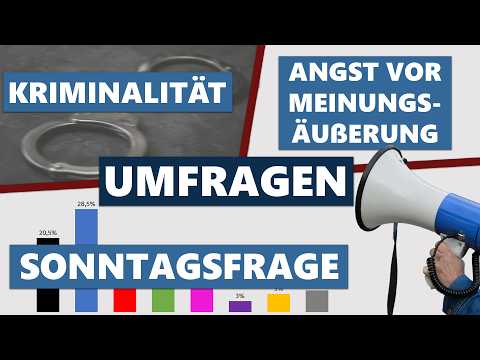 📺 Aktuelle Umfragen: Sonntagsfrage, maximales Potential, nicht gemeldete Kriminalität und mehr | INSA
Analysis of the INSA Opinion Trend Survey from August 17, 2026
▼
This presentation walks through five key findings from the INSA opinion trend survey dated August 17, 2026, covering voting intentions, attitudes toward political decision-making, self-censorship, unreported crime, and personal provisions against old-age poverty. Each topic is introduced with its headline figures and, where relevant, a breakdown by party affiliation.
■ The Sunday Question and Political Potential
- Current party standings and the coalition arithmetic that follows
- The maximum potential support ranking among the parties
- Respondents' views on whether Germany would fare better with their own preferred policies
■ Personal and Social Findings
- Instances of not voicing one's own opinion to avoid conflict or disadvantage
- Criminal experiences that respondents chose not to report
- Provision against old-age poverty, including differences across party supporters
■ INSA Subscription
- Access to more detailed data, socio-demographic breakdowns, an interactive constituency map, and further analysis features
This is suited to viewers who follow German politics and public opinion polling and want a quick, structured summary of the survey's main results. Watching lets you grasp the headline figures and the scope of the topics covered, and the subscription option is there if you wish to explore the underlying data yourself.
 📺 INSA-Umfragen: Sonntagsfrage, AfD-Ministerpräsident/Linke Reg. Bürgermeisterin, Migration, Umwelt...
INSA Poll Analysis for August 10, 2026: Sunday Question, September State Elections, and Four Political Demands
▼
This analysis breaks down the latest INSA opinion trend released on August 10, 2026, covering party support, upcoming state election outcomes, and public backing for four key political demands. Each section is based on surveyed responses, so viewers can follow how the numbers translate into possible coalition majorities and voter preferences.
■ Sunday Question and Potential Analysis
- Party gains and losses, and the vote share needed for parliamentary majorities
- Comparison of coalition arithmetic and maximum possible party potential
■ September State Elections
- Public preferences for the candidacies in Saxony-Anhalt and Berlin
- Differences between eastern and western respondents and by party affiliation
■ Four Political Demands
- Levels of agreement on migration, the economy, defense, and environmental protection
- How self-reported engagement with each topic relates to agreement
It is suited to viewers who follow German politics and want a compact, data-based overview of current polling. Watching helps you understand how poll numbers, coalition scenarios, and voter engagement are presented, and where to look up the detailed figures and interactive maps.
 📺 Aktuelle Umfragen: Sonntagsfrage, Auswandern, Kanzlerdirektwahl, Landtagswahlabsicht | INSA
INSA Poll Analysis for August 5, 2026: Voting Intent, Emigration Plans, and Chancellor Run-Off Scenarios
▼
This analysis of the latest INSA opinion trend walks through the current state of German voting intent as of August 5, 2026, after a one-week break. Beyond the standard Sunday question, it covers emigration intentions, hypothetical direct elections for chancellor, and how respondents would vote in state elections. Each topic is broken down by party, age group, and region so you can see how the numbers shift across different segments.
■ Voting intent and parliamentary majorities
- Changes in party support and which parties clear the five-percent threshold
- Possible coalition arithmetic and how much margin those majorities carry
- Support for each party across age groups, from under 30 to over 70
■ Emigration intentions
- Share of respondents who plan to leave Germany within the next five years
- Differences by age and by party affiliation
■ Hypothetical direct election for chancellor
- Match-ups involving the incumbent and a party-internal rival against the AfD chair
- Comparison of the two scenarios and how each candidate is received by their own voters
■ State election voting intent
- Overall figures compared with federal-level voting intent
- Differences between the western and eastern federal states ahead of the September elections
The video is aimed at viewers who want a structured, numbers-focused read on German polling trends and coalition arithmetic. It concludes with information on the interactive tools and analyses available through the INSA subscription, and what to watch for in the coming weeks.
 📺 Aktuelle Umfragen: Sonntagsfrage, Christliche Prägung Deutschlands, Politische Haltung
INSA Opinion Trend Analysis, July 20, 2026: Sunday Question, Political Inheritance, and Christian Identity in Germany
▼
This installment of the INSA Meinungstrend series, dated July 20, 2026, walks through three survey topics: the Sunday question with each party's maximum potential, how often respondents share their parents' political views, and how important the Christian character of Germany is to them. Data is presented in a compact, numbers-first format with breakdowns by age, gender, region, and party affiliation.
■ Sunday Question and Party Potential
- Vote shares and gains or losses across parties
- Maximum achievable potential for each party, including where the AfD stands
- Additional breakdowns by gender, age, and household net income for channel members
■ Political Views Across Generations
- Share of respondents who agree with one or both parents politically
- How party loyalties differ from those of voters' parents
■ Importance of Germany's Christian Character
- Overall support for preserving it, plus differences by age group
- Comparison between church membership and attitudes toward Christian identity
- West-East split and the parties trusted to uphold this character
The video also outlines what is included in the INSA subscription, such as sociodemographic crosstabs, an interactive constituency map, and a potential analysis. It is suited to viewers tracking German public opinion and polling trends; they can gain a clear picture of where political attitudes currently stand and how they vary across social and regional groups. Consider subscribing to the channel for next week's update.
 📺 INSA-Umfragen: Sonntagsfrage, Koalitionswunsch, Beschäftigung mit politischen Themen und mehr
INSA Opinion Trend Analysis for July 13, 2026: Sunday Question, East–West Split, Coalition Preferences and Campaign Willingness
▼
This is an analysis of the INSA opinion trend released on July 13, 2026, organized around four topics. It presents the current Sunday question alongside a separate look at East and West Germany, then moves on to how often respondents engage with politics, the coalition partners each party's voters prefer, and who would be willing to campaign for their own party.
■ Sunday question (Sonntagsfrage)
- Week-over-week changes in party support and which parliamentary majorities are arithmetically possible
- Results split by East and West Germany, with all of Berlin counted as the East
- How the individual parties perform in each region
■ Political engagement and coalition preferences
- How frequently respondents deal with political topics, overall and by party
- The preferred coalition partners for the voters of each party
■ Campaigning and additional data
- How willing voters are to advertise for the party they currently support
- Availability of socio-demographic breakdowns, an interactive constituency map and further analysis through the Insa subscription
This is aimed at viewers who follow German polling and coalition arithmetic on a regular basis. It offers a compact weekly readout of the survey's main figures and group comparisons, which can serve as a starting point for anyone wanting to track opinion trends over time.
📄 このページの紹介文は AI が独自に生成したものであり、著作権をはじめとする他者の権利(商標権・名誉権・プライバシー等)を侵害しないよう配慮しています。動画の著作権は各作成者に帰属します。