 📺 NVIDIA Didn't Want Me to Do This… Linux on RTX Spark
Running Linux on NVIDIA RTX Spark Laptops: Installation, Performance, and Power Behavior Tested
▼
The MSI Prestige N16 Flip AI Plus is one of the new RTX Spark laptops featuring NVIDIA's ARM-based chip with CUDA support and up to 128 GB of unified memory. Since AI tooling is largely Linux-first, many developers want to know whether these Windows-on-ARM machines can run Linux natively. I attempted a dual boot setup over three days and tested how Linux, WSL, and Windows each perform, and what is limiting Linux GPU performance.
■ Dual Boot Setup
- Trying Omari and Debian, and the hardware support each one provides
- Working around a display output issue during boot and installation
- Adjusting the GPU-reserved memory allocation from Windows
■ Performance Testing
- Token-per-second comparisons for a large model across Windows, WSL, the DGX Spark, and native Linux
- Multi-client throughput tests with vLLM and SGLang
- GPU clock speed and thermal behavior on battery versus plugged in
- The role of the NVIDIA Platform Controllers and Framework device in power management
■ Practical Takeaways
- WSL as a current working option, including its memory configuration
- What would need to change in NVIDIA's Linux driver for native support
This is useful viewing for developers and Linux users considering one of these ARM-based AI laptops, especially anyone deciding between a native Linux setup and WSL. It shows what a real-world installation involves, which performance factors to watch, and what to verify before relying on one of these machines.
このチャンネルのほかの紹介
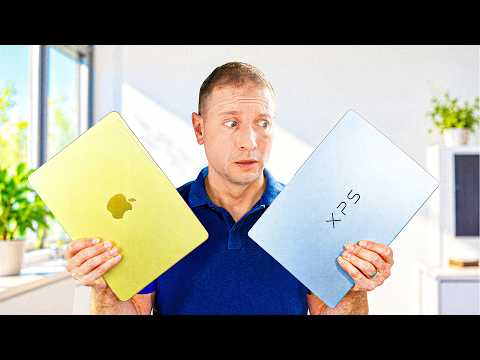
Dell XPS 13 vs MacBook Neo: Developer Benchmark Comparison
Two entry-level laptops at the same price are put through real development workloads to see how they compare. …

Testing Whether a One-Hand-Sized Mini PC Can Run a 27B Parameter AI Model
A palm-sized mini PC is put to the test on whether it can handle a serious 27 billion parameter AI model. The …

Running a 17.6 GB AI Model on a 16 GB GPU: Layer Splitting vs. Smaller Quantization
I tested what to do when an AI model barely does not fit in a GPU's VRAM. Using an RTX 5060 Ti with 16 GB and …
この動画を紹介した Alex Ziskind の最新動画も、紹介付きで読めます。
いつも見ているチャンネルも、同じように紹介できます。
いつも見ているチャンネルを追加する📄 このページの紹介文は AI が独自に生成したものであり、著作権をはじめとする他者の権利(商標権・名誉権・プライバシー等)を侵害しないよう配慮しています。動画の著作権は各作成者に帰属します。