CNBC Television
 📺 Don't see Fed Chairman Warsh raising rates before the midterms, says Wharton's Jeremy Siegel
紹介を準備中です…
▼
📺 Don't see Fed Chairman Warsh raising rates before the midterms, says Wharton's Jeremy Siegel
紹介を準備中です…
▼
 📺 Demographics And Destiny 8/24/26
US Demographic Shifts: Aging Population and Economic Implications
▼
📺 Demographics And Destiny 8/24/26
US Demographic Shifts: Aging Population and Economic Implications
▼
This report examines the projected slowdown in U.S. population growth, driven by declining birth rates and lower immigration, and highlights the impending shift toward an older demographic. It also discusses the potential consequences for Social Security and the broader economy, referencing data from the Washington Post and the Weldon Cooper Center.
■ Demographic Trends
- Population growth expected to slow through 2050
- Birth rates declining and childbearing delayed
- Lower immigration contributing to fewer people
■ Economic and Policy Implications
- One in five Americans projected to be 65 or older by 2030
- Fewer working-age adults per senior citizen
- Social Security sustainability called into question
■ Further Reading
- Washington Post piece titled "When America's Budget Will Break Disastrously"
- 2030 identified as an inflection point for federal spending
This video is suited for viewers interested in demographic economics, fiscal policy, and the long-term outlook for U.S. social programs. Watching it provides a concise overview of key population data and the budgetary challenges ahead.
 📺 Mad Money 08/21/26 | Audio Only
Jim Cramer's Wall Street Jargon Dictionary: Key Investing Terms Explained
▼
📺 Mad Money 08/21/26 | Audio Only
Jim Cramer's Wall Street Jargon Dictionary: Key Investing Terms Explained
▼
I break down the most important Wall Street terms that often confuse everyday investors, from cyclical vs. secular growth to P/E multiples, risk-reward, and the difference between a trade and an investment.
■ Core Valuation Concepts
- Cyclical vs. secular growth and why it matters
- P/E multiples, EPS, top line, bottom line, and gross margins
■ Trading and Risk Management
- Risk-reward analysis, GARP, and the PEG ratio
- Trade vs. investment and the role of a catalyst
■ Market Behavior and Investor Q&A
- Corrections, rotations, execution, and diversification
- Caller questions on asset allocation, 529 plans, tax-loss harvesting, and technical analysis
This guide is ideal for self-directed investors who want to move beyond jargon and make more informed decisions about individual stocks, index funds, and long-term portfolio strategy.
 📺 Bernstein's Rasgon: Nvidia's numbers should be good, looking for commentary on Rubin ramp
Nvidia Earnings Preview: Rubin Cycle, Margins, and Financing Backstops
▼
📺 Bernstein's Rasgon: Nvidia's numbers should be good, looking for commentary on Rubin ramp
Nvidia Earnings Preview: Rubin Cycle, Margins, and Financing Backstops
▼
Ahead of Nvidia's next earnings report, Bernstein senior semis analyst Stacy Rasgon shares what to watch, from the start of the Rubin cycle and data center revenue growth to gross margin trends and the growing role of financing backstops for large AI infrastructure projects.
■ Earnings expectations
- Strong results expected as Rubin cycle begins
- Possible upward revision to multi-year growth outlook
■ Margins and costs
- Memory and wafer pricing pressure
- Confirmation of mid-70s gross margin range
■ Financing and stock outlook
- Nvidia's credit backstops for customer projects
- Recent underperformance and early signs of reversal
This discussion is useful for investors looking to understand the key drivers and risks around Nvidia's earnings, including growth sustainability, margin pressure, and financing dynamics.
 📺 U.S. Treasury's buyback announcement didn't buy enough time, says Bernstein's Roosevelt Bowman
Treasury Yields, AI Trade Diversification, and Fixed Income Outlook
▼
📺 U.S. Treasury's buyback announcement didn't buy enough time, says Bernstein's Roosevelt Bowman
Treasury Yields, AI Trade Diversification, and Fixed Income Outlook
▼
The conversation examines why Treasury yields have climbed back despite the Treasury Department's buyback announcement, and what that signals about fiscal and monetary policy credibility. It also addresses how investors can approach the AI trade beyond major infrastructure producers and what the inflation-wage dynamic may mean for markets.
■ Treasury yields and policy credibility
- Inflation pressures from Middle East conflict and oil
- Buyback seen as temporary, limited credibility
■ Diversifying the AI trade
- Moving beyond hyperscalers to healthcare innovation
- AI in forecasting and drug discovery
■ Market and fixed income outlook
- Light data week, Jackson Hole focus
- Inflation outpacing wages could slow consumption
- Yields rising despite weak data; forward labor indicators supportive
The discussion is suited for investors and market participants seeking perspectives on defensive positioning, sector selection, and the near-term path for bonds and equities.
 📺 Market Close: Stocks Cut Week's Losses, 2 Retailers Rally, Bullish Bitcoin Move 8-21-2026
Wall Street Ends Losing Week with Modest Rally; Retailers and Bitcoin Stocks Surge
▼
📺 Market Close: Stocks Cut Week's Losses, 2 Retailers Rally, Bullish Bitcoin Move 8-21-2026
Wall Street Ends Losing Week with Modest Rally; Retailers and Bitcoin Stocks Surge
▼
This CNBC report recaps the final trading day of a volatile week, highlighting a modest Wall Street rally, strong retail earnings, and a surge in bitcoin-linked stocks.
■ Market Overview
- Dow, S&P 500, and Nasdaq close higher, with Dow posting its best day since August 4.
- Morgan Stanley's Jim LeCamp says the bullish trend remains despite volatility.
■ Sector Movers
- Ross Stores and BJ's Wholesale rally after beating quarterly expectations.
- Bitcoin-related stocks jump as the digital currency rises over 20% this week.
■ Economic Data
- S&P Global service sector index reaches its highest level since December 2024.
This report is suited for investors and market watchers seeking a concise recap of the day's market drivers and sector performance.
 📺 Trading the major week ahead: The Investment Committee's strategy
Nvidia Earnings and Fed Speech: What Matters Most for Markets Next Week
▼
📺 Trading the major week ahead: The Investment Committee's strategy
Nvidia Earnings and Fed Speech: What Matters Most for Markets Next Week
▼
This video analyzes the key market events scheduled for the coming week, focusing on Nvidia's earnings report and the Federal Reserve chair's speech. The discussion explores how these events may influence stock market direction, interest rates, and investor sentiment.
■ Market Context and Key Events
- Stocks and yields are both rising, with attention turning to next week
- Nvidia is having its best month since April and leading mega-cap performance
- The Fed chair's speech and Nvidia earnings are the two main catalysts
■ Nvidia Earnings Outlook
- Expectations for strong results and revenue growth of nearly 97% year-over-year
- Debate over whether the stock price reaction or the actual numbers matter more
- Potential impact on other AI-related companies and the broader S&P 500
■ Fed Communication and Rate Policy
- The Fed chair faces pressure to maintain a hawkish stance while acknowledging softer economic data
- Discussion of options for controlling long-term yields, including rate hikes or quantitative easing
- The speech may be more influential than Nvidia for near-term market direction
■ Market Forecast and Earnings Season
- One analyst argues next week is not decisive, with Q3 earnings season in November being the true driver
- Another analyst sees Nvidia's guidance as critical for hundreds of large-cap stocks
- Both agree that earnings growth remains strong despite rising interest rates
This video is suited for investors and market observers seeking a balanced perspective on the upcoming week's major events and their potential market impact. Viewers will gain insights into how to interpret Nvidia's report and Fed communication, and what to watch for in the months ahead.
 📺 The Treasury buyback was a 'wise thing to do', says Fundstrat's Tom Lee
Treasury Buybacks, Jackson Hole, and AI Data Center Concerns: Market Outlook
▼
📺 The Treasury buyback was a 'wise thing to do', says Fundstrat's Tom Lee
Treasury Buybacks, Jackson Hole, and AI Data Center Concerns: Market Outlook
▼
This discussion covers the Treasury's recent decision to buy back long-duration bonds, the upcoming Jackson Hole meeting, and the growing political opposition to AI data centers. The speakers analyze whether these factors are signals of value or sources of market uncertainty, and what investors should watch in the coming week.
■ Treasury Buyback and Fed Policy
- Treasury buyback seen as a value signal, not manipulation
- Fed Chair Walsh can distinguish illiquid long bonds from key shorter maturities
■ Key Events for Markets
- Jackson Hole speech expected to provide clarity on yields
- Nvidia earnings could reinject confidence in the AI trade
■ AI Data Center Concerns
- Political opposition in several states is stalling the AI trade
- Downstream AI stocks (software, biotech, crypto) are gaining attention
This is aimed at investors and market watchers seeking a concise overview of current Treasury, Fed, and AI-related market dynamics, and what to watch in the coming week.
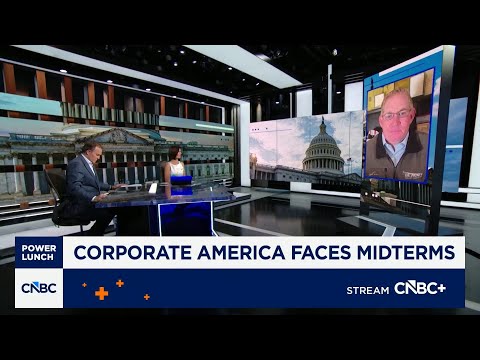 📺 Big Pharma and some financial services companies could be hurt by midterms: Beacon Policy's Myrow
Democratic Oversight and the Private Sector: Investor Risks from Trump Ties
▼
📺 Big Pharma and some financial services companies could be hurt by midterms: Beacon Policy's Myrow
Democratic Oversight and the Private Sector: Investor Risks from Trump Ties
▼
Stephen Myrow of Beacon Policy Advisors explains how Democrats may pursue a second track of oversight by targeting private companies and their CEOs, rather than directly confronting the administration. He outlines which sectors and publicly traded companies could face investor discounts due to ties to Trump or potential investigations.
- Democrats plan to use subpoenas and document requests against companies to pressure the administration.
- Sectors at risk include big pharma, financial services, fintech, and prediction markets.
- Examples include CEOs from Novartis, Gilead, and Lilly, plus Polymarket and Kalshi advisory ties.
- Investors should identify companies with both close administration ties and negative public perception.
This analysis is intended for investors and policy watchers seeking to understand how political oversight can affect stock prices and which companies may be in the crosshairs.
 📺 Broadcom's newest debt deal: Here's what to know
Broadcom and Nvidia Finance AI Deals with Off-Balance-Sheet Debt
▼
📺 Broadcom's newest debt deal: Here's what to know
Broadcom and Nvidia Finance AI Deals with Off-Balance-Sheet Debt
▼
Chipmakers Broadcom and Nvidia are financing the AI boom with off-balance-sheet debt, following Meta's lead. We break down the structure, scale, and risks of these deals.
■ Broadcom's debt financing plans
- Talks to raise over $60 billion, possibly up to $100 billion, for an AI chip deal
- Uses a special purpose vehicle to keep debt off its balance sheet and leases chips to customers like Anthropic
- Guarantees part of the debt and chip value; Bank of America estimates exposure could reach $370 billion by 2029
■ Nvidia's larger but more limited approach
- Targeting more than $500 billion in deals, backstopping up to 25% of them
■ Meta's pioneering off-books model
- Raised about $27 billion with Blue Owl for a data center it now leases back
■ Risks and outlook
- Works while compute is scarce, but oversupply could trigger guarantees
This is for investors and tech professionals who want to understand the financial engineering behind AI infrastructure. Viewers will learn how off-balance-sheet financing works and what could happen if the AI compute cycle turns.