Scott Manley Video Summaries
AI-generated English translations of new videos. A no-sign-up video summary & translation page
 📺 World's Largest Slingshot Threw A Spacecraft To Earth!
The YES2 Mission: Deploying the Longest Spacecraft Ever
▼
This video examines the European Space Agency's YES2 mission, which successfully deployed a tether system to create the longest spacecraft in history. It details the engineering challenges, orbital mechanics, and scientific outcomes of using a long cable for propulsion and deorbiting without traditional thrusters.
- Historical context of tethered satellites and early experiments like Gemini and Shuttle Tethered Satellite System
- Design and components of the YES2 payload, including the photon capsule and deployment mechanism
- Orbital mechanics principles behind tether deployment, gravity gradient stabilization, and pendulum motion
- The deployment process on the Foton-M3 mission, including the braking system and tension control
- Mission results, data analysis from accelerometers, and verification of successful deorbiting despite lost contact
Viewers will gain an understanding of advanced space propulsion technologies and the practical application of orbital dynamics in real-world missions.
 📺 Superheavy Launch - Ultra Slow Motion
この動画の紹介が用意できませんでした
▼
 📺 Orbit Day - Starship Finally Takes A Big Leap
Starship Flight 14: First Orbit, Starlink Deployment, and Return Analysis
▼
This video provides a detailed technical breakdown of SpaceX's Starship Flight 14, marking the vehicle's first successful entry into orbit. It covers the launch sequence, in-flight anomalies, decision-making processes regarding orbital insertion, and the subsequent deployment of Starlink satellites.
■ Launch and Ascent Dynamics
- Falcon 1 historical context and Starship Block 3 performance
- Ascent profile with asymmetric engine ignition and booster separation
- Booster landing attempt in the Gulf of Mexico and subsequent explosion
■ Orbital Insertion and Decision Making
- Vacuum engine failure during ascent and its implications
- Real-time team deliberation on whether to proceed to orbit
- Execution of the burn to achieve a 275-kilometer orbit
■ Starlink V3 Satellite Deployment
- Daylight deployment allowing clear visual observation
- Detailed look at Starlink V3 design, cameras, and internal components
- Staggered release timing and orbital mechanics of deployed satellites
■ Orbital Maneuvers and Re-entry Preparation
- Early exit maneuver to avoid satellite interference
- RCS usage for formation flying and separation from Starlink fleet
- Planned re-entry trajectory over the Indian Ocean and landing site near Hawaii
■ Conclusion
This analysis is valuable for aerospace enthusiasts and engineers interested in the operational realities of heavy-lift rocket testing. Viewers will gain insight into the risk assessment protocols and mechanical behaviors observed during complex orbital missions.
 📺 Starship Seen From Starlink - In Color For First Time!
この動画の紹介が用意できませんでした
▼
 📺 Starship's 14th Flight - Orbiting Safely?
SpaceX Starship Flight 14: Orbital Insertion Strategy and Landing Options
▼
This content outlines the operational plan for SpaceX's fourteenth Starship test flight, highlighting the transition from suborbital trajectories to a genuine orbital insertion. It details the critical decision points regarding engine ignition, satellite deployment, and potential landing zones across the Indian Ocean, Hawaii, and South America.
■ Mission Profile and Orbital Entry
- Launch window on September 28 at 7:15 AM Texas time
- Initial 9-minute burn resulting in a suborbital trajectory
- 15-minute observation period to decide on orbital insertion
- Potential coverage of six orbits lasting approximately 10 hours
■ Contingency Plans and Landing Zones
- Primary ocean landing in the Indian Ocean if engines are not ignited
- Backup landing zone north of Hawaii requiring atmospheric entry over the Philippines
- Final landing attempt west of Chile after remaining in space for four additional orbits
- Expected explosive termination upon landing without recovery via the launch tower
Viewers interested in aerospace engineering and mission planning will gain insight into the risk management strategies and technical constraints involved in achieving reusable orbital flight.
 📺 What Do They Run on America's Fastest SuperComputer?
Inside El Capitan: The World's Fastest Supercomputer at Lawrence Livermore National Laboratory
▼
This video provides an exclusive tour of El Capitan, the world's fastest supercomputer located at Lawrence Livermore National Laboratory. It explores the massive infrastructure, hardware architecture, and specialized software required to achieve exascale computing for nuclear deterrence and scientific research.
Key topics include:
- Infrastructure and Power: Overview of the ECFM project, including 40 megawatts of power capacity and evaporative cooling systems.
- Hardware Architecture: Details on AMD MI300 APUs, Slingshot interconnects, liquid cooling loops, and the unique 'Rabbit' storage nodes.
- Software Stack: Explanation of the TOSS operating system, Flux scheduler, and MPI communication protocols.
- Scientific Applications: Use cases in inertial confinement fusion, fluid dynamics, and structural mechanics for national security.
- Open Science System: Introduction to Tualamai, a non-classified counterpart used for open research and code development.
Viewers will gain a comprehensive understanding of the engineering challenges behind exascale computing and its critical role in modern science and defense.
 📺 Can I Fly A Spaceship Using a DJ Mixer?????
Playing Kerbal Space Program with a DJ Controller
▼
This video demonstrates the technical challenge and humorous outcome of controlling the space simulation game Kerbal Space Program using a professional DJ controller instead of standard flight sticks. It explores the feasibility of repurposing music mixing hardware for complex spacecraft navigation through custom software integration.
- Hardware Setup: Overview of connecting a DJ controller to a PC and mapping its physical controls, such as jog wheels, faders, and buttons, to in-game functions via Python scripts and MIDI signals.
- Flight Mechanics Analysis: Testing the controller's responsiveness for camera movement, time acceleration, throttle control, and attitude adjustment during atmospheric flight.
- Orbital Maneuvers: Executing a launch, achieving orbit, and performing interplanetary transfers to the Moon using SAS modes and manual thrust adjustments.
- Lunar Landing Procedure: Navigating the dark side of the Moon, adjusting descent trajectories, and executing a precise landing on the lunar surface using the unconventional interface.
- Software Configuration: Explanation of the YAML configuration file used to map dead zones, curves, and button actions without recompiling the code.
Viewers interested in creative hardware hacking, Python scripting for games, or unique gaming setups will gain insight into the possibilities of alternative input devices. The content provides a practical example of bridging digital audio workstation protocols with flight simulation mechanics.
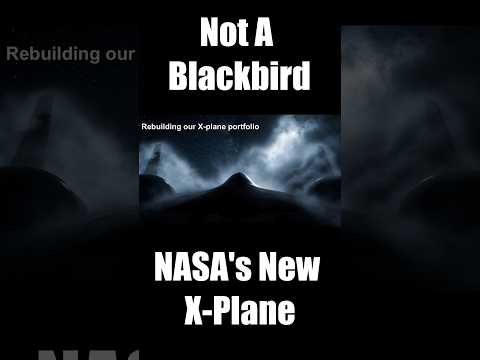 📺 NASA Reveals New X-Plane In Development
NASA's Return to High-Speed Flight: The SR-71 Blackbird Connection
▼
NASA Administrator Jim Bridenstine hints at a future high-speed flight project reminiscent of the SR-71 Blackbird, signaling a renewed commitment to testing flight boundaries. This discussion explores NASA's plans to rebuild its X-plane fleet and collaborate with industry to push the limits of structural design and propulsion systems.
- Announcement of NASA's return to high-speed, high-altitude flight capabilities
- Rebuilding the X-plane fleet alongside the ongoing X-59 quiet supersonic research
- Industry collaboration to advance structural design and propulsion technologies
- Visual reference to the SR-71 Blackbird indicating potential new high-speed aircraft developments
This content is suitable for aviation enthusiasts interested in NASA's strategic direction and future aerospace technology advancements.
 📺 How The Space Shuttle Boosters Landed
Space Shuttle Solid Rocket Booster Recovery Process
▼
This content details the mechanical and physical processes involved in the recovery of Space Shuttle Solid Rocket Boosters (SRBs) after separation from the external tank. It explains the trajectory, parachute deployment sequence, and water landing mechanics that allow these massive components to be retrieved for reuse.
- Initial Separation and Trajectory: Details the boosters' speed (approx. 3000 mph), apogee (70 km), and re-entry deceleration.
- Parachute Deployment Sequence: Explains the pressure sensor activation, pilot chute extraction, drogue chute stabilization, and main chute inflation stages.
- Water Landing and Buoyancy: Describes the vertical impact speed, flooding mechanism, and final floating position with 20% protrusion above water.
Viewers interested in aerospace engineering or historical space mission logistics will gain a clear understanding of the complex recovery systems used to make spaceflight more cost-effective through component reuse.
 📺 Breaking Every Tile On Shuttle's Heat Shield
Space Shuttle Thermal Protection System Waterproofing Process
▼
This content explains the specialized waterproofing procedures applied to the thermal protection tiles of the Space Shuttle Discovery. It details how non-destructive testing methods are used to inject sealants into the tile surfaces without compromising their integrity.
- Injection technique using blunt needles to penetrate paint layers
- Identification of pre-marked hole locations on the tiles
- Visual inspection points at the Smithsonian Air and Space Museum in Virginia
Viewers interested in aerospace engineering and historical spacecraft maintenance will gain insight into the rigorous preservation techniques used for retired space vehicles.
 📺 You Won't Believe What NASA Puts In These Tanks
Inside NASA's Massive Vacuum Chambers and Hypersonic Wind Tunnels
▼
This video explores the engineering behind NASA's largest vacuum facilities, explaining how massive spherical tanks create the necessary conditions for hypersonic wind tunnel testing. It highlights the unique challenges of maintaining a vacuum on Earth compared to space and showcases the scale of these critical aerospace infrastructure components.
- The function of large spherical vacuum tanks in driving hypersonic wind tunnels
- The process of moving gas from high-pressure vessels into a vacuum
- Comparison with the Space Power Facility, the world's largest vacuum chamber
- The significance of these facilities in testing spacecraft return vehicles
Viewers interested in aerospace engineering and NASA infrastructure will gain insight into the complex systems required for high-speed flight testing.
 📺 SpaceX's Falcon 9 Will Be Killed Off - Deep Space Updates September 18th
Deep Space Updates: Starship Flight 14, Global Launches, and Industry Shifts
▼
This video provides a comprehensive overview of recent global spaceflight activities, focusing on the upcoming Starship Flight 14 mission while reviewing launches from September. It covers technical updates, new rocket introductions, and significant shifts in the commercial space industry landscape.
■ Starship Flight 14 Preparations
- Booster engine relighting issues due to ice formation and planned software fixes
- Mission profile: six orbits, deployment of operational Starlink satellites, and re-entry over the Pacific
- Decision to forego booster and ship catches for this flight
■ Recent Global Launch Activities
- Galactic Energy's Palace 1 maiden flight and suborbital status
- Aerospace's Spectrum launch using liquid propane propellant
- Vega C dual-manifest launch with Sentinel 3C and Fluorescence Explorer
- Multiple Falcon 9, Electron, and Long March missions including classified payloads
■ Commercial Space Industry Trends
- SpaceX's strategic shift away from Falcon 9 towards Starship post-2028
- NASA funding Boeing Starliner for certification on alternative launch vehicles
- New contracts for European cargo transport and Mars telecommunications
■ Deep Space and Technology Updates
- Nancy Grace Roman Space Telescope wake-up and optical tuning
- Stoke Space Block 2 development and funding
- Impulse Technologies' upper stage capabilities and valuation
■ Space Policy and Debris Concerns
- ESA space environment report highlighting increasing debris levels
- US acknowledgment of on-orbit space control capabilities
- Proposals for a new US Space Academy
Viewers gain insight into current launch cadence, emerging propulsion technologies, and the evolving geopolitical and commercial dynamics shaping the future of space exploration.
 📺 Massive New Crater Found On Moon!
Discovery of the Largest New Lunar Crater: Magatshim Impact Analysis
▼
This content details the recent discovery and analysis of Magatshim, the largest new crater found on the Moon, formed between April and May 2024. It explains how orbital imagery revealed this significant geological event and provides scientific estimates regarding its size, energy release, and frequency.
- Formation and Detection: Identification of the crater through comparison of wide-angle and narrow-angle images from the Lunar Orbiter.
- Physical Characteristics: Diameter exceeds 222 meters, three times larger than previously observed new craters.
- Impact Energy and Frequency: Equivalent to a 15-kiloton nuclear weapon or a 10-meter asteroid impact; estimated to occur once per century.
- Surface Alteration: Exposure of lighter subsurface materials and thermal cooling effects extending over 100 kilometers.
Viewers interested in lunar geology and recent astronomical discoveries will gain insight into current detection methods and the scale of extraterrestrial impacts.
 📺 China Has More Rocket Designs Than Anyone Else.....
China's Expanding Rocket Fleet: A Comprehensive Overview
▼
This video provides a comprehensive overview of the many rockets developed in China since 2014, when private companies were allowed to enter the space industry. It explains the origins, designs, and performance of these rockets, highlighting the commonalities between them and their connections to missile technology.
■ Private Solid-Fuel Rockets
- Kuaizhou 1/1A/11 (CASIC)
- Ceres-1 (Galactic Energy)
- Hyperbola-1 (iSpace)
- Jielong-1 (China Rocket)
■ Private Liquid-Fuel Rockets
- Zuchong-2/3 (LandSpace)
- Tianlong-2/3 (Space Pioneer)
- Kinetica-2 (CAS Space)
- Nebula-1 (Deep Blue Aerospace)
■ New Long March Variants
- Long March 8, 10, 12, and their sub-variants
- Focus on cryogenic propellants and recovery systems
■ Shared Heritage and Future Outlook
- Common use of missile-derived solid motors
- Trend toward larger, reusable launch vehicles
This video is ideal for space enthusiasts and industry observers who want to understand the rapid expansion and technological trends of China's launch industry. Viewers will gain a clear picture of the key players, their rockets, and the shared engineering approaches that define this new era.
 📺 Nuclear Design Bureau - A Game Where You Design Nuclear Weapons
Nuclear Design Bureau: Designing and Testing Nuclear Weapons in a Physics Simulator
▼
Scott Manley demonstrates Nuclear Design Bureau, a physics simulator game that lets players design and test nuclear weapons using simplified two-dimensional physics and publicly available nuclear principles. The video walks through building gun-type and implosion devices, improving yields with tampers and reflectors, and experimenting with boosted fission and thermonuclear concepts.
■ Game Overview and Safety Review
- Introduction to the game and its physics simulation
- Explanation of the US government review and public availability of information
■ Gun-Type and Implosion Weapon Design
- Building a simple uranium gun-type device and improving yield with a tamper
- Creating a spherical implosion device with detonators and explosive lenses
- Using depleted uranium tampers and neutron generators to improve compression
■ Thermonuclear Devices and Advanced Concepts
- Exploring radiation implosion and fusion boosting
- Observing a thermonuclear test and comparing with real archival footage
■ Game Status and Availability
- Current closed beta, expected early access, and potential future mission types
For viewers interested in nuclear physics, game design, or historical weapons science, this video offers a detailed look at how these devices work and the challenges of simulating them. It also clarifies the limitations of the game as an educational tool rather than a realistic design tool.
📄 このページの紹介文は AI が独自に生成したものであり、著作権をはじめとする他者の権利(商標権・名誉権・プライバシー等)を侵害しないよう配慮しています。動画の著作権は各作成者に帰属します。