 📺 This Spacecraft Came Back From Death 20 Years Later
The Unexpected Revival of the AMSAT AO-7 Amateur Radio Satellite
▼
AMSAT's AO-7, the second Phase 2 amateur radio satellite, was launched in November 1974 as a secondary payload on a Delta rocket alongside NOAA 4. After its battery pack failed in mid-1981, it was considered dead for roughly two decades — until a British radio amateur picked up an unexpected signal in 2002.
■ Satellite History
- AO-7's launch and nearly seven years of operation
- The nickel-cadmium battery short circuit that shut down the power system in 1981
- The satellite's status as inactive for around 20 years
■ The 2002 Signal Reception
- A British amateur scanning the 2-meter band for unauthorized transmissions finds slow Morse code at 145.97 MHz
- Doppler shift consistent with an orbiting source
- The classic AMSAT greeting and three-number telemetry groups in the old Oscar standard format
■ Telemetry and Diagnosis
- 24 channels covering battery voltage, current, and temperatures, designed for pencil-and-paper logging
- Confirmation via the AMSAT bulletin board and the frequency matching AO-7's old beacon
- Project manager John King's explanation for how the radio could run on solar power
Recommended for amateur radio operators, satellite enthusiasts, and anyone interested in spacecraft engineering or the history of the Oscar satellite program. It offers a concrete example of how a decades-old failure mode can be diagnosed from a received signal, along with background on the telemetry format used by early Oscar satellites. Viewing the full account is advised for the complete sequence of events and reasoning.
このチャンネルのほかの紹介
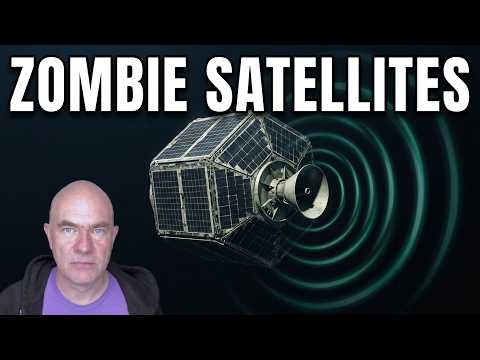
Zombie Satellites: How Abandoned Spacecraft Come Back to Life from Beyond the Grave
Long-dead satellites that were abandoned in orbit are sometimes detected transmitting signals again, sometimes…

Keihan Space's Orbital Data Center Rocket: Big Iron, Clydesdale Engines, and the 2028 Goal
Scott Manley reviews the recently announced plans of Keihan Space, formerly Aether Flux, the company founded b…

A New Dwarf Planet Candidate Discovered at the Edge of the Solar System
The Vera Rubin Observatory has identified a new trans-Neptunian object designated 2026 ED138, potentially larg…
この動画を紹介した Scott Manley の最新動画も、紹介付きで読めます。
いつも見ているチャンネルも、同じように紹介できます。
いつも見ているチャンネルを追加する📄 このページの紹介文は AI が独自に生成したものであり、著作権をはじめとする他者の権利(商標権・名誉権・プライバシー等)を侵害しないよう配慮しています。動画の著作権は各作成者に帰属します。