Scott Manley Video Summaries
AI-generated English translations of new videos. A no-sign-up video summary & translation page
 📺 What Is NASA Doing With Its Old Blackbird?
Could NASA Return an SR-71 Blackbird to Flight?
▼
I examine why NASA’s renewed interest in high-speed X-plane research has prompted speculation about returning an SR-71 to flight. The discussion separates publicly known history from unconfirmed possibilities and explains the aircraft’s engineering constraints through concrete examples.
■ Background and restoration questions
- The YF-12 and SR-71 research programs, and the status of the displayed aircraft
- Challenges involving engines, ground equipment, documentation, and JP-7 fuel
■ How the aircraft operates
- The J58 engine, inlet shock waves, and inlet unstarts
- Temperature, airframe, and stability limits at high speeds
■ Possible research uses
- Potential roles for a restored aircraft in testing newer propulsion systems; NASA has made no public confirmation of such a plan
For viewers interested in aerospace history, propulsion, or experimental aircraft, this offers context for evaluating claims about a possible return to flight. Use the engineering limits and the distinction between confirmed information and speculation as a guide when following future announcements.
 📺 How To Start A Nuclear Chain Reaction
From Neutron Discovery to Modern Neutron Generators
▼
I trace how the neutron was discovered and explain why controlling the timing of neutron production matters in nuclear chain reactions. The discussion follows the development of neutron sources from early experiments to compact generators and scientific imaging applications.
■ Discovery and nuclear history
- Curie, Chadwick, Fermi, and the discovery of fission
- How neutron-induced reactions informed early reactor and weapon development
■ Neutron-source technology and applications
- The historical shift from polonium-based initiators to external neutron generators
- Modern neutron tubes and their use in nondestructive testing and imaging
Timestamps are not available in the supplied transcript. This overview is suited to viewers interested in nuclear physics and its history; it provides context for how neutron sources evolved, rather than a practical construction guide. As you watch, follow how the need for precise timing shaped each technological change.
 📺 The Long Term Effects Of The Cheylabinsk Bolide
The Chelyabinsk Meteor and Its Long-Lived Dust Cloud
▼
I discuss the 2013 Chelyabinsk meteor, including its effects on people and the atmosphere. The account also describes research using satellite observations to track the dust cloud after the initial event.
- The meteor’s impact, damage, and a researcher’s family connection to Chelyabinsk
- Satellite observations of the dust cloud’s movement and persistence
For viewers interested in meteors, atmospheric science, or Earth-observing satellites, this offers context on effects that continued well beyond the brief flash and shock wave. Watch for how satellite measurements helped follow the cloud over time.
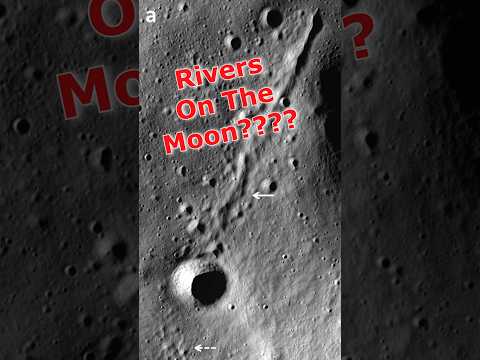 📺 Could Ancient Rivers Have Flowed on The Moon?
Could Brief Water Flows Leave Tracks Near the Moon’s Poles?
▼
We discuss small craters and channel-like features in the Moon’s polar highlands as possible traces of short-lived flows involving water and rocky debris. The conversation outlines a comparison with Apollo 17 geologist Harrison Schmitt’s experience at Taurus–Littrow and distinguishes this hypothesis from rivers flowing across the lunar surface.
- Polar crater features and the possibility of transient meltwater mixed with debris
- Estimated channel dimensions and flow duration discussed by the researchers
- Scope and caveat: the proposed interpretation is still under study and is not presented as confirmed water evidence
For viewers interested in lunar geology and the search for resources relevant to a lunar base, this provides context for evaluating the claim. Keep the distinction between a possible brief, debris-assisted flow and established evidence in mind when following future research on the topic.
 📺 What Was It Like To Watch Your Space Mission Crash?
Inside the Room During NASA’s DART Impact
▼
I speak with Gal Sarid of the Space Science Institute about his work on NASA’s DART mission and his experience watching its final approach. His account focuses on the incoming spacecraft images and the response in the room as DART reached its target.
- DART mission context and Sarid’s planetary science work
- The final images before impact and the mission team’s reaction
- A firsthand account rather than a technical explanation of the spacecraft or impact results
For viewers interested in planetary science and space missions, this account offers a glimpse of how the final moments unfolded for people present. Use it as a starting point for exploring DART’s mission and its broader scientific context.
 📺 What is the 'Moon To Mars Architecture'?
NASA’s Moon-to-Mars Architecture: Data and Technology Gaps
▼
An overview of NASA’s Moon-to-Mars architecture and the knowledge and technology gaps that shape planning for extended exploration. The discussion uses examples from lunar environments, Mars weather, and plant-based life-support systems.
- Moon-to-Mars framework and the role of data gaps in planning exploration
- Examples of unknowns: lunar ice, soil, radiation, and surface materials, plus Martian weather
- Technology gaps, including nutrition for long-duration missions and growing plants in space
The discussion focuses on these planning challenges and examples rather than detailed mission designs or technical solutions. It is intended for viewers interested in space exploration and life-support research; afterward, they can use the identified gaps as a guide to topics for further study.
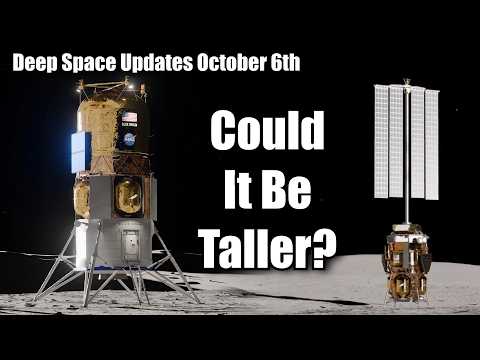 📺 Blue Origin Taller Lunar Lander, SpaceX Launches All Its Rockets - Deep Space Updates Oct 6th
Spaceflight Updates: Starship Flight 14, Launches, and Program Developments
▼
I review recent orbital launches and spaceflight developments, with particular attention to Starship Flight 14 and SpaceX’s busy launch schedule. The roundup also covers crewed missions, spacecraft programs, and changes across the launch industry, distinguishing reported events from uncertain mission details.
■ Launches and crewed missions
- Starship Flight 14, Starlink deployment, and Falcon booster recovery
- Crew-13, Transporter 18, Falcon Heavy, and other September–October launches
■ Space programs and vehicles
- Updates on Starliner, Artemis, Blue Origin’s lunar plans, and New Glenn
- Deep-space missions, satellite services, and launch-provider developments
■ Industry and aerospace news
- Rocket Lab, SpinLaunch, Orbex assets, and other company updates
- Defense and experimental aircraft stories, plus upcoming mission prospects
For space enthusiasts and viewers following launch vehicles, missions, and space policy, this provides a broad overview rather than a detailed technical analysis of each item. Use it to identify developments to follow next, then check mission operators’ updates for the latest schedules and confirmed details.
 📺 Scientist Explains Why We Need A Mars Weather Forecast
Why Mars Needs Better Weather Forecasts
▼
Mars weather forecasting could help address uncertainty in spacecraft landing locations and the risks posed by dust storms. Drawing on an interview with Orestes Real of SSAI, the discussion explains how atmospheric conditions shape these challenges.
- The Martian landing challenge: large landing uncertainty linked to winds, atmospheric density, and dust
- Forecasting and dust storms: how advance weather information could support more precise landings, and how small dust vortices may combine into larger storms
For viewers interested in Mars exploration, this offers an overview of the connection between weather and landing accuracy. Consider the roles of wind, density, and dust when following discussions of future Mars missions; detailed forecasting methods are not covered.
 📺 Did DART Do Science? Or Just Get Payback For The Dinosaurs.
Understanding the Beta Factor in Planetary Defense: Insights from the DART Mission
▼
This content explores the physics behind NASA's Double Asteroid Redirection Test (DART) mission, focusing on the measurement of the momentum enhancement factor, known as beta. It explains how the impact on the asteroid Dimorphos resulted in a beta value significantly greater than one, revealing the crucial role of ejected debris in altering the asteroid's trajectory.
- Background of the DART mission and its objective to test planetary defense models
- Definition and significance of the beta parameter in collision dynamics
- Explanation of why beta exceeded one due to ejecta acting as a thruster
- Implications for future kinetic impactor strategies
Viewers interested in space science and planetary defense will gain a clear understanding of how kinetic impacts transfer momentum and why debris ejection is critical for deflection success.
 📺 The Questions We Need To Answer, The Solutions We Must Find for Moon To Mars
NASA's Moon to Mars Plans, Lunar Resources, Planetary Defense, and Space Weather Research
▼
Scott Manley speaks with scientists from Science Systems and Applications, Inc. (SSI) about NASA's Moon to Mars architecture, lunar resource use, planetary defense, and space weather. The discussion covers how SSI supports NASA missions and identifies data and technology gaps for sustainable exploration beyond Earth.
■ Moon to Mars architecture and lunar exploration
- Artemis, sustainable lunar base, resource utilization, data and technology gaps
■ Lunar water, ice, and resources
- Ilmenite and oxygen extraction; water cycle, polar ice, LRO observations, possible subsurface ice flows
■ Planetary defense and asteroid impacts
- Chelyabinsk event, DART mission, beta factor, binary asteroid targeting
■ Space weather, radiation, and Mars weather
- Cosmic rays, solar energetic particles, radiation forecasting; Mars AOSSE, dust storms, atmospheric dynamics
This is relevant for spaceflight enthusiasts, students, and professionals interested in Artemis, lunar and Mars science, planetary defense, and space weather. Viewers gain an overview of current research and mission planning considerations for long-term human presence beyond Earth.
 📺 Can We Measure Water In The Moon's Thin Atmosphere?
Artemis 2 Lunar Observations and Research into Lunar Water
▼
A scientist discusses how Artemis 2 crew observations behind the Moon deepened his connection to his work. The observations focus on the eclipsed Moon and small meteorites striking the lunar surface, alongside research into how water is released, forms, and moves on the Moon.
■ Artemis 2 observations
- Crew's unique perspective from behind the Moon
- Sightings of the eclipsed Moon and small meteorites impacting the lunar surface
■ Lunar water research
- Meteorites as a possible mechanism for distributing water on the Moon
- Technologies for understanding water release, formation, and movement
- Potential for water deposits to accumulate in specific regions, including the poles
■ Future exploration
- Implications for locating water resources for future astronauts
- Role of lunar water in enabling further solar system exploration
It is suited to viewers interested in lunar science, Artemis missions, and the search for water resources that could support future human exploration.
 📺 Earth Observing Spacecraft Looks At Moon, Finds Something Important
Repurposing Earth-Observation Camera Data to Map Ilmenite on the Moon
▼
Incidental Moon images from an Earth-observing camera were used to map ilmenite, a titanium-iron oxide mineral, on the lunar surface. The focus is on Dr. Nick Gorkavyi's work at SSAI and NASA Goddard, analyzing existing data not originally intended for lunar mapping.
■ The camera and accidental lunar observations
- The EPIC camera on DSCOVR was designed for Earth observation, but the Moon occasionally appears in the frame
- Color differences allow ilmenite to be distinguished from surrounding lunar material, with simplified red and purple areas
■ Ilmenite mapping and resource significance
- Dr. Gorkavyi identified ilmenite-rich locations, mainly in the lunar maria
- Ilmenite contains iron, titanium, and oxygen, and extraction processes for these elements have been studied
■ Data reuse and broader implications
- A global map of ilmenite was built using data that were not collected for that purpose
- The work suggests that archives may hold undiscovered insights, limited by human analysis capacity
Viewers interested in lunar geology, space resource utilization, and remote sensing can learn how serendipitous data can be repurposed. It provides an overview of the method and its implications for future lunar exploration.
 📺 World's Largest Slingshot Threw A Spacecraft To Earth!
The YES2 Mission: Deploying the Longest Spacecraft Ever
▼
This video examines the European Space Agency's YES2 mission, which successfully deployed a tether system to create the longest spacecraft in history. It details the engineering challenges, orbital mechanics, and scientific outcomes of using a long cable for propulsion and deorbiting without traditional thrusters.
- Historical context of tethered satellites and early experiments like Gemini and Shuttle Tethered Satellite System
- Design and components of the YES2 payload, including the photon capsule and deployment mechanism
- Orbital mechanics principles behind tether deployment, gravity gradient stabilization, and pendulum motion
- The deployment process on the Foton-M3 mission, including the braking system and tension control
- Mission results, data analysis from accelerometers, and verification of successful deorbiting despite lost contact
Viewers will gain an understanding of advanced space propulsion technologies and the practical application of orbital dynamics in real-world missions.
 📺 Superheavy Launch - Ultra Slow Motion
この動画はメンバー限定コンテンツです
▼
 📺 Orbit Day - Starship Finally Takes A Big Leap
Starship Flight 14: First Orbit, Starlink Deployment, and Return Analysis
▼
This video provides a detailed technical breakdown of SpaceX's Starship Flight 14, marking the vehicle's first successful entry into orbit. It covers the launch sequence, in-flight anomalies, decision-making processes regarding orbital insertion, and the subsequent deployment of Starlink satellites.
■ Launch and Ascent Dynamics
- Falcon 1 historical context and Starship Block 3 performance
- Ascent profile with asymmetric engine ignition and booster separation
- Booster landing attempt in the Gulf of Mexico and subsequent explosion
■ Orbital Insertion and Decision Making
- Vacuum engine failure during ascent and its implications
- Real-time team deliberation on whether to proceed to orbit
- Execution of the burn to achieve a 275-kilometer orbit
■ Starlink V3 Satellite Deployment
- Daylight deployment allowing clear visual observation
- Detailed look at Starlink V3 design, cameras, and internal components
- Staggered release timing and orbital mechanics of deployed satellites
■ Orbital Maneuvers and Re-entry Preparation
- Early exit maneuver to avoid satellite interference
- RCS usage for formation flying and separation from Starlink fleet
- Planned re-entry trajectory over the Indian Ocean and landing site near Hawaii
■ Conclusion
This analysis is valuable for aerospace enthusiasts and engineers interested in the operational realities of heavy-lift rocket testing. Viewers will gain insight into the risk assessment protocols and mechanical behaviors observed during complex orbital missions.
📄 このページの紹介文は AI が独自に生成したものであり、著作権をはじめとする他者の権利(商標権・名誉権・プライバシー等)を侵害しないよう配慮しています。動画の著作権は各作成者に帰属します。