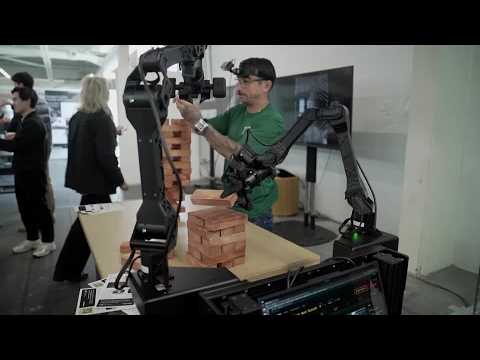
 📺 AI company uses Jenga, cameras and muscle sensors to train robots
Teaching a Robot to Play Jenga Using Muscle Signals and Curated Training Data
▼
The content examines how a robot is taught a seemingly simple human task—playing Jenga—by capturing neural signals from muscles and preparing the resulting data for AI training. It explains why Jenga is difficult for robots because success depends on sensory inputs such as force and placement, and it outlines the data steps needed before model training.
■ Robot task and sensory challenge
- Jenga requires controlling pressure on a piece and placing it precisely to avoid collapsing the tower
- The task has not yet been trained into robots, so the robot must first be shown how to perform it
■ Data acquisition from muscle signals
- Neural signals are captured from muscles to execute the task in a way that reflects muscle–brain communication
■ Data preparation for AI training
- Data must be coordinated, enriched, and evaluated before it is ready for training
- Relevant training signals must be identified within the data
- Enrichment includes annotations and inference traces so the robot can understand the nature and form of the data
- Data quality must be assessed before the data is fed into the model
Viewers interested in robotics, human–machine interfaces, and AI data pipelines can gain a high-level view of the workflow from biological signal capture to training-ready data. The content does not provide implementation details or performance results.
この動画を紹介した Reuters の最新動画も、紹介付きで読めます。
📄 このページの紹介文は AI が独自に生成したものであり、著作権をはじめとする他者の権利(商標権・名誉権・プライバシー等)を侵害しないよう配慮しています。動画の著作権は各作成者に帰属します。