このチャンネルのほかの紹介

Using ChatGPT Finance and Plaid to Track Subscriptions and Build a Budget
The transcript explains how to connect bank and credit-card accounts to ChatGPT's Finance feature through Plai…

An Add-On for Programmatically Generating SVG Graphics and 3D Assets
Craig, a software developer, explains how an add-on enables programmatic creation of SVG graphics and 3D asset…

Conversational Assistant Supports a Busy Family Day
A conversational assistant helps a family navigate shifting daily plans, from rescheduling appointments after …
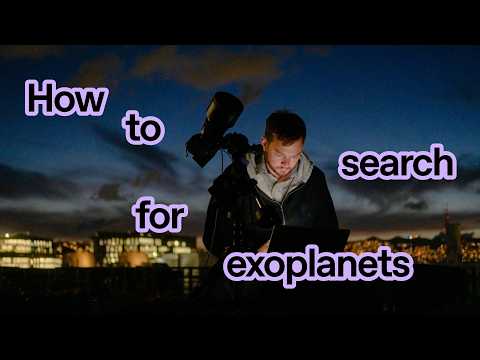 📺 How to Search for Exoplanets
Using Codex and Public Kepler Data to Search for Exoplanets on a Laptop
▼
A personal account describes how public Kepler telescope data and the Codex tool were used on a laptop to search for exoplanets. The narrative begins with childhood interest in Comet Hale-Bopp and moves into an amateur astronomer's workflow for analyzing light curves. It also covers how candidate signals were reviewed with a professional astronomer at the SETI Institute.
■ Workflow and tools
- Using Codex to assemble and process astrophotography images
- Transitioning from image processing to exoplanet candidate search
- Obtaining publicly available Kepler data
■ Detection process
- Building a processing pipeline for Kepler light-curve data
- Running brightness-dip tests across more than 100,000 stars
- Receiving a positive signal after about one and a half days
- Shifting from broad search to validation of a single candidate
- Checking alternative explanations for promising signals
■ Expert review and perspective
- Contacting a SETI Institute astronomer to review two exoplanet candidates
- Reflecting on how amateur exploration can lead to further questions and independent research
It is suited to viewers interested in amateur astronomy, exoplanet detection, and practical use of the Codex tool with public scientific data. Viewers can gain an overview of a home-based search workflow and the importance of validating candidate signals before drawing conclusions. It may also encourage viewers to explore public datasets and develop their own research questions.
この動画を紹介した OpenAI の最新動画も、紹介付きで読めます。
いつも見ているチャンネルも、同じように紹介できます。
いつも見ているチャンネルを追加する📄 このページの紹介文は AI が独自に生成したものであり、著作権をはじめとする他者の権利(商標権・名誉権・プライバシー等)を侵害しないよう配慮しています。動画の著作権は各作成者に帰属します。