Microsoft Video Summaries
AI-generated summaries of new videos. A no-sign-up video summary & introduction page
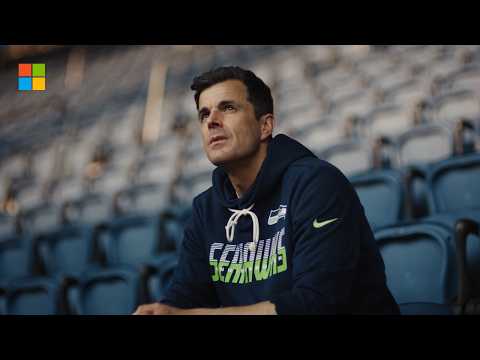 📺 Why Seattle Seahawks coaches rely on this analyst every game
NFL Analytics, Coaching Support, and Copilot in Excel
▼
An NFL analytics assistant describes his path from backup quarterback to a behind-the-scenes game-day support role. The account focuses on how football information is organized and how Microsoft Copilot in Excel is used to assist coaching decisions.
■ Background and Career Path
- Childhood NFL aspirations and a father’s role in Minnesota Vikings research and development
- Advice about the value of being a great assistant
■ Analytics and Technology in Football
- The art and science of football analytics
- Using Copilot in Excel to review plays, snap counts, and personnel
■ Role and Impact
- Serving as a right-hand resource for football information and digital tracking
- The significance of a Super Bowl ring and family connection
Suitable for viewers curious about NFL analytics roles, coaching support, or practical applications of Copilot in Excel. It offers a high-level overview of the responsibilities and tools involved without detailing specific methods or outcomes.
 📺 2,000 people. One team. | Microsoft x Mercedes-AMG PETRONAS F1
How Microsoft Technologies Support a Formula One Team
▼
We show how a Formula One team uses Microsoft 365, Azure Batch, GitHub Copilot, and Power BI to coordinate 2,000 people, run race simulations, accelerate development, and make data-driven decisions. The focus is on practical applications across communication, computing, development, and analytics.
■ Communication and collaboration
- Microsoft 365 for direct communication across the team
■ Simulation and data processing
- Azure Batch to scale computing nodes for race simulations
■ Development acceleration
- GitHub Copilot to increase development throughput
■ Data visualization and decision-making
- Power BI to combine manufacturing, finance, and car performance data
For those interested in how cloud, AI, and data tools are applied in high-stakes engineering environments, this provides a clear view of specific Microsoft services used in Formula One operations.
 📺 Tech, labor, and token costs: the new AI math
Strategic Triangulation of Tech, Labor, and Token Costs in Enterprise AI
▼
Enterprises face the complex challenge of balancing technology costs, labor expenses, and token usage when integrating AI solutions. This content explores how to move beyond individual budget silos to determine the optimal deployment of super agents versus human talent based on overall organizational impact.
- Evaluating the triangulation of tech, labor, and token costs
- Shifting from forced choices to strategic deployment decisions
- Optimizing resource allocation between technology solutions and human skill sets
This discussion provides a framework for decision-makers to strategically allocate resources between automated agents and personnel, enabling more informed choices about where to deploy technology and people for maximum efficiency.
 📺 The AI skill everyone should have
Overcoming Fear to Effectively Use AI Agents
▼
This content addresses the common hesitation tech organizations face when adopting AI agents, emphasizing that success requires developing specific skills and a willingness to experiment. It highlights that fear of failure often prevents users from fully utilizing tools like Copilot, advocating for an iterative approach to learning.
- The gap between deployment and actual usage in tech ecosystems
- Psychological barriers such as fear of making mistakes or building agents
- Reframing iteration as progress rather than failure
- Practical steps to gain confidence through hands-on experimentation
Viewers seeking to enhance their AI adoption strategies will learn how to shift their mindset from avoiding errors to embracing iterative development for better agent integration.
 📺 This company has more AI agents than employees
How Kantar’s Chief People and Agent Officer Is Leading an Enterprise AI Transformation
▼
Andy Doyle, Chief People and Agent Officer at Kantar, explains how the market research company moved from a small Copilot pilot to an organization-wide AI transformation with more agents than employees. He shares the practical steps, challenges, and lessons from building an “agent factory” and combining people and agent management into one role.
■ AI Transformation at Kantar
- Rolling out Copilot to all 12,000 employees and reaching an 85% daily usage rate
- Moving from individual experimentation to enterprise-wide agent adoption
- Saving an average of two hours per person per week in the first year
■ The Agent Factory and Governance
- Managing 15,000 agents, with about 150 enterprise-level agents
- Categorizing agents into no-code, low-code, and pro-code tiers
- Centralizing successful agents while preserving grassroots innovation
■ People, Change, and Adoption
- Addressing employee anxiety and the fear of failure with AI
- Using internal influencers and “citizen agent builders” to drive adoption
- Redesigning HR work, including a people agent that handles 40% of queries without human intervention
■ Advice for Leaders
- Going all in on AI while focusing on human-centered change
- Building skills for experimentation and iteration rather than perfection
- Measuring ROI through productivity, engagement, and quality metrics
This episode is valuable for HR leaders, executives, and change managers who want a realistic, example-rich look at how a non-tech company is integrating AI agents into its workforce and what it takes to bring people along.
 📺 What CEOs are quietly admitting about AI
The Critical Gap in Corporate AI Strategy: C-Suite Engagement
▼
This content addresses the disconnect between executive leadership and practical AI implementation, highlighting the risks when C-suite executives lack direct experience with AI tools. It emphasizes the necessity of a dual approach combining top-down vision setting with bottom-up execution to ensure organizational alignment.
- The implications of executives failing to build or use single agents
- The importance of integrating top-down strategy with bottom-up operational tactics
- Common challenges faced by CEOs who have not yet engaged with AI technologies
Viewers will gain insight into why executive involvement is crucial for successful AI adoption and how to bridge the gap between high-level strategy and hands-on application.

 📺 3 skills you need in the age of AI
Key Skillsets for Success in the AI Age
▼
This content outlines three essential skill sets required to thrive in an era dominated by artificial intelligence. It emphasizes the importance of personal agency, curiosity, and systems thinking when managing digital workforces.
- High Agency: The necessity of proactive problem-solving rather than passively accepting AI limitations or manual workflows.
- Strong Sense of Wonder: Maintaining deep curiosity regardless of age or career stage to drive innovation.
- Systems Thinking: Developing the ability to manage multi-agent systems, a critical shift for both early-career professionals and experienced managers.
Viewers will gain a clear framework for adapting their professional mindset to effectively lead and collaborate within automated and AI-driven environments.
 📺 The AI shift most companies didn't see coming
AI Is Not a Tool: Navigating the Multi-Agent Shift in Enterprise Transformation
▼
In this live Work Lab recording from the Copilot Summit, host Molly Wood speaks with Ali K Miller, founder and CEO of Open Machine, about how enterprises must rethink AI strategy as the technology shifts into a multi-agent era. Miller explains why treating AI as a simple productivity tool limits transformation, and outlines practical approaches for leadership, workforce upskilling, and frontier experimentation.
■ The Current AI Shift
- Moving from chatbots to reasoning models to multi-agent systems
- Cost pressures and the need for targeted experimentation rather than company-wide rollout
■ Leadership and Culture
- The importance of C-suite hands-on AI use and middle-manager modeling
- Moving beyond productivity metrics to measure growth, trust, and new business creation
- Addressing employee fear and building motivation through care and clear vision
■ Building Frontier Teams and Practical Steps
- Creating small, cross-functional frontier units with higher budgets and minimal layers
- Developing skills like high agency, curiosity, and systems thinking
- Immediate actions: build a company-wide context layer, make AI proactive, and stop typing
This session is for executives, AI leaders, and transformation teams seeking a realistic view of how to move from AI-curious to AI-first within their organizations.
 📺 The AI question every team should ask
Integrating AI into Workflow and Decision Analysis
▼
This content explores how teams can effectively identify opportunities for AI intervention within existing workflows to enhance decision analysis, scenario planning, and proactive quality thinking. It addresses the challenges in measuring ROI as these advanced metrics become more complex.
- Identifying high-value points for AI assistance in workflow visibility
- Enhancing decision analysis and scenario work through AI
- Implementing proactive quality thinking to delight customers
- Navigating the increased complexity of measuring ROI and metrics
Viewers will gain insights into strategic questions for optimizing processes with AI and understanding the evolving landscape of performance measurement.
 📺 The sound of survival
Protecting Endangered Orcas with AI-Powered Acoustic Monitoring
▼
Underwater noise from cargo ships poses a serious threat to the critically endangered Southern Resident killer whales in the Salish Sea. This video looks at how acoustic monitoring buoys and AI are being developed to detect whales in real time and help reduce ship noise.
■ The problem of underwater noise
- How ship noise interferes with orca communication and hunting
- Why real-time whale detection is essential
■ An autonomous detection system
- Buoys equipped with hydrophones and edge processors
- Cloud-based AI classification and automatic alerts to mariners
■ Conservation at scale
- Informing ships to slow down when whales are present
- Applying the same approach to marine habitats worldwide
This is a valuable resource for those interested in marine conservation, AI for environmental monitoring, and wildlife protection. Viewers will learn how technology can support endangered species recovery.
 📺 Your job will never stop changing
この動画は短いため紹介が用意できません
▼
 📺 The future of work has no org chart | Microsoft Katy George
AI Transformation at Work: From Pilots to Business Transformation
▼
Host Molly Wood speaks with Katy George, Corporate Vice President of Workforce Transformation at Microsoft, about how organizations can move from AI pilots to genuine business transformation. The conversation explores the mindset shifts required, the importance of involving employees in redesigning work, and how to measure AI progress beyond simple productivity metrics.
- Why AI transformation is a continuous process, not a one-time change
- Moving from individual productivity to team-based transformation with programs like Camp Air
- Leadership and culture for the frontier firm: business-led, cross-disciplinary, and multigenerational teams
- Measuring AI success: linking adoption to behavior change and business outcomes, and the concept of capability add
Business leaders, HR professionals, and individual contributors will gain practical perspectives on how to approach AI adoption strategically and what practices help organizations move from experimentation to sustainable transformation.
 📺 Doris Kearns Goodwin meets Teddy Roosevelt
Reflections on Power, Legacy, and the Fight: A Conversation with Theodore Roosevelt
▼
This dialogue explores the mindset of a historical figure known for relentless action and resistance to established power structures. It examines how personal will and public sentiment shape leadership during times of significant change.
- The dynamic relationship with powerful institutions like J.P. Morgan and the railroad industry
- The shifting nature of public opinion and the 'kaleidoscope' of national will
- Prioritizing active engagement and fighting in the arena over historical legacy
- The value of maintaining strength and voice until the end
Ideal for those interested in leadership dynamics and historical perspectives on resilience. Viewers gain insight into the philosophy of continuous effort and the importance of standing firm against opposition.
 📺 Nations rise on what gets built | Episode 5
From George Washington's Vision to Modern AI Infrastructure: Building for the Future
▼
This content explores the historical continuity of American infrastructure development, tracing the path from George Washington’s early canal projects to modern data centers and AI initiatives. It highlights how collaborative governance models, such as the Mount Vernon Compact, inform current strategies for balancing technological advancement with community needs.
- Historical Context: Washington’s vision for connecting the Eastern Seaboard to the frontier through canals at Great Falls
- Governance Models: The role of the Mount Vernon Compact in fostering cooperation between Maryland and Virginia officials
- Evolution of Infrastructure: Progression from canals and railroads to electricity grids, highways, and airports
- Modern Challenges: Addressing local concerns regarding data centers, including electricity costs, water usage, and job creation
- Community-Centric Approach: Engaging with county councils and state governments to establish fair rules and prioritize community interests
Viewers gain insight into the enduring principles of infrastructure planning and learn how historical precedents shape contemporary efforts to integrate AI technology responsibly.
📄 このページの紹介文は AI が独自に生成したものであり、著作権をはじめとする他者の権利(商標権・名誉権・プライバシー等)を侵害しないよう配慮しています。動画の著作権は各作成者に帰属します。