Google for Developers Video Summaries
AI-generated English translations of new videos. A no-sign-up video summary & translation page
 📺 How to transform audio into physical prints using Gemini and Google AI Studio
Building an AI-Powered Daily Receipt Lamp with Gemini
▼
This project demonstrates the creation of a 'Daily Receipts' lamp, an interactive device built entirely using Google's Gemini AI. The system allows users to speak their daily thoughts into the lamp, which then analyzes vocal emotions and tone to generate symbolic imagery printed on a physical receipt.
- Project Overview: Introduction to the Daily Receipts lamp as a tangible output for abstract ideas.
- Voice Analysis: Utilizing Gemini to extract general emotions, tone, and mood from user speech.
- Image Generation: Passing analyzed data to Nano Banana to create symbolic representations.
- Physical Output: Printing the generated symbols onto collectible receipts.
- Creative Process: Using AI to overcome technical barriers and quickly realize unique concepts.
This content is suitable for creators interested in combining generative AI with hardware projects. Viewers can gain insights into integrating voice analysis with image generation tools to produce personalized physical artifacts.
 📺 Per-Layer Embeddings (PLE) in Gemma 4 explained
Understanding Layer-wise Embeddings in Gemma Models
▼
This video explains the concept of layer-wise embeddings used in Gemma E2B and E4B models, highlighting how they enhance representation without increasing active parameters. It details the mechanism behind PLE and the distinction between effective parameters and stored look-up tables.
- Definition of Layer-wise Embeddings and their role in Gemma models
- The function of the embedding layer in converting symbols to numerical representations
- How PLE expands identifiers into three-dimensional representations across layers
- Differences in embeddings for specific tokens like 'high' at various depths (e.g., layer 1 vs. layer 6)
- The efficiency of inference by accessing only necessary parts of large embedding tables
- Classification of structure and encodings as effective parameters versus flash-stored embeddings
- Benefits of increased representational capacity without actual parameter growth during computation
Viewers will gain a clear understanding of how layer-specific embeddings optimize model performance and memory usage. This content is suitable for those interested in the architectural nuances of modern LLMs.
 📺 The next generation of voice AI with Google DeepMind and Sierra AI
Overview of Native Voice Models and Sierra AI Agents
▼
This content introduces new native voice models designed for varying levels of complexity and performance, alongside updates to the Sierra platform for building specialized AI agents. It details the technical considerations behind response times, language switching capabilities, and evaluation standards in conversational AI.
- New Voice Model Variants: Explanation of two primary models, one optimized for speed in clear conversations and another for high-precision, multi-step task execution.
- Sierra Platform Capabilities: Development of custom customer service and sales agents with strategic long-term reasoning.
- Benchmarking and Response Time: Discussion on CalBench metrics, focusing on minimizing first audio latency and delivering useful information quickly.
- Language Switching and Quality: Insights into seamless multilingual transitions and the "Maslow's Hierarchy of Voice" framework for evaluating accuracy, quality, and experience.
- Future Development Trends: Observations on rapid progress in voice technology and the role of immediate dialogue in user interaction.
The content is suitable for developers and researchers interested in the architecture and evaluation of next-generation voice AI systems. Viewers will gain an understanding of current benchmarks, model differentiation, and the trajectory of real-time conversational interfaces.
 📺 Gemma 4 12B: The encoder-free model explained
Gemma 4 12B: Understanding the Encoder-Free Architecture
▼
This video explains the architectural differences of Gemma 4 12B, specifically focusing on its encoder-free design for processing audio and image inputs. It details how this model bypasses traditional large encoders to reduce latency and parameter count compared to other models in the Gemma 4 family.
- Audio Processing Method
- Removal of the Conformer audio encoder
- Direct projection of amplitude values to the LLM
- Image Processing Method
- Use of a lightweight embedder instead of a vision encoder
- Addition of positional information for 3D pixel data
- Comparison with Other Models
- Contrast with models using large vision and audio encoders
- Impact on time-to-first-token and parameter efficiency
This content is suitable for developers and researchers interested in multimodal LLM architectures. Viewers will gain a clear understanding of how removing encoders affects input processing and model performance.
 📺 Understand the Gemma 4 model family
Gemma 4 Model Family Explained in Two Minutes
▼
This video provides a concise overview of the Gemma 4 family, detailing its multimodal open large language models across five sizes and four architectures. It explains the technical distinctions between dense, mixture-of-experts, and encoder-free designs to help users select the appropriate model for their hardware capabilities.
- Small models (E2B, E4B): Dense architecture with per-layer embeddings for efficient on-device usage.
- Medium model (12B): Encoder-free design that directly projects audio to the LLM for high-end laptops.
- Large model (26B A4B): Mixture-of-experts architecture using only active parameters for complex vision tasks.
- Top-tier model (31B): The most capable dense model with enhanced vision encoding.
Viewers will gain a clear understanding of how each Gemma 4 variant balances performance and efficiency. This content is ideal for developers and researchers evaluating model deployment options.
 📺 🪄 Gemini Live API in action
Gemini Live API: Asynchronous Function Calling and Advanced Inference Capabilities
▼
This content introduces new features in the Gemini Live API, focusing on asynchronous function calling, proactive audio responses, and advanced background inference capabilities. It demonstrates how these updates enhance execution speed and allow for more natural, context-aware interactions.
- Introduction to new API features including asynchronous function calling and proactive audio modes
- Demonstration of client-side context integration using order ID lookup
- Visual generation example with SVG output of a swan riding a bicycle
- Comparison between standard model output and high-inference Max model results
- Explanation of detailed visual elements added by the advanced inference model
Viewers can understand the technical improvements in real-time AI interaction and see practical examples of enhanced reasoning and multimodal output generation.
 📺 What's new in the Gemini Live API
Introducing New Gemini Live API Features: Async Function Calling, Proactive Audio, and More
▼
This video introduces the latest updates to the Gemini Live API, showcasing new capabilities that enhance real-time voice interactions. It demonstrates how these features improve efficiency, responsiveness, and reasoning in conversational AI applications.
■ New API Features
- Async function calling for background task execution
- Proactive audio to speak only when relevant
- Context injection via send client content
- Frontier-level background reasoning
■ Demonstrations
- Injecting context without forcing a turn
- Checking order status while continuing conversation
- Generating an SVG of a pelican riding a bike with high reasoning
■ Model Comparison
- Standard native audio model vs. max high reasoning model
- Visual difference in output quality
This video is ideal for developers and AI enthusiasts interested in building with the Gemini Live API. Viewers will learn about the new features, see practical examples, and understand how to leverage them for more interactive and intelligent voice applications. To get started, explore the Gemini Live API documentation and try implementing these features in your own projects.
 📺 Manage your agents while you’re on the move with the Antigravity Remote Control
Introducing Ant Gravity Remote Control for Unified Agent Management
▼
Ant Gravity Remote Control enables users to operate and manage multiple AI agents from a single location via a browser or mobile app. This tool provides a unified view of all sessions, allowing for efficient monitoring and guidance while maintaining local context.
- Centralized control of various agents through a web browser or mobile application
- Unified dashboard for monitoring and directing all active sessions simultaneously
- Background execution of long-running tasks with notification-based intervention only when necessary
- Seamless approval of changes, answering questions, and continuing progress from any location
- Preservation of local context to eliminate the need for rebuilding or syncing build environments across devices
This solution is designed for developers and power users who require streamlined agent management without compromising local workflow integrity. Users can enhance productivity by delegating lengthy processes and intervening only at critical decision points.
 📺 Celebrating one billion Gemma downloads
Gemma 1 Billion Downloads Event: Developers Share Insights and Future Plans
▼
At the Gemma 1 Billion Downloads event, developers share their experiences with Gemma models, highlighting strengths in vision, speed, and multimodal understanding, as well as tools built around the model.
■ Model capabilities
- Vision and world knowledge for model size
- Fast inference and out-of-box performance
- Gemma 4 supports video and audio understanding
■ Developer ecosystem
- Post-training for creative writing and interactive stories
- Unsloth Desktop: local coding agent and fine-tuning
- GenieX platform with high customer demand for Gemma
- Expectations for Gemma 5 and 6
This video is for developers and AI enthusiasts who want to understand Gemma's current strengths and the tools being built around it. Viewers will gain insight into practical applications and upcoming model developments.
 📺 Agentic approaches to processing long videos with Gemini
Optimizing Video Analysis with Gemini's Agentic Understanding
▼
This content explains how to leverage Gemini's agentic video understanding to efficiently extract specific information without processing entire videos. It details a workflow where the model autonomously selects tools like text extraction and frame retrieval to focus on relevant data, thereby reducing token usage and improving performance.
- Agentic Workflow: The model decides which tools to use based on user queries.
- Tool Selection: Utilizes functions such as getting text, frames, and audio.
- Efficiency Gains: Reduces token consumption by focusing only on necessary parts.
- Performance Improvement: Enhances accuracy by paying attention to key video elements.
- Iterative Process: Follows a think-execute-observe loop to reach accurate answers.
Viewers will learn how to implement efficient video analysis strategies using advanced AI models. This approach is suitable for developers and researchers looking to optimize resource usage in video processing tasks.
 📺 Agentic video understanding in Gemini
Agentic Video Understanding with Gemini: A Cost-Effective Approach
▼
Agentic video understanding with Gemini is a method that reduces processing cost by allowing the model to use tools such as transcript extraction and frame selection instead of analyzing the entire video.
- The problem with naive video processing: high token usage and irrelevant information
- The agentic approach: using tools like get transcript, get frames, and get audio
- The agentic loop: thinking, acting, observing, and repeating until an answer is derived
- Benefits: lower token usage and better performance through targeted attention
This technique suits developers and AI practitioners who want to build efficient video analysis systems. After watching, you will understand how to set up an agentic pipeline and select the appropriate tools for a given query.
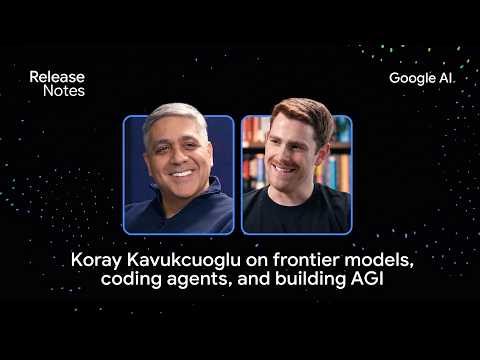 📺 Koray Kavukcuoglu on frontier models, coding agents, and building AGI
Google DeepMind's Koray Kavukcuoglu on Gemini Progress, Frontier AI, and the Road to AGI
▼
In this episode of Release Notes, Logan Kilpatrick sits down with Koray Kavukcuoglu, CTO of Google DeepMind, to discuss recent advances in the Gemini model family, the importance of frontier AI, and the long-term journey toward AGI. The conversation covers the rapid iteration from Gemini 3.5 to 3.7, the role of user feedback in shaping AI development, and reflections on DeepMind's history from DQN to AlphaFold.
■ Gemini Model Development
- Progress from Gemini 3.5 to 3.7 and parallel research tracks
- Current work on Gemini 3.5 Pro and Gemini 4
■ Frontier AI and Strategy
- The importance of being at the frontier
- Google's long-term investment in AI and technology
■ History and Evolution of DeepMind
- Early deep learning and RL research, including DQN and Atari
- Scaling from games to complex real-world domains
■ Building AGI with Users
- The role of deployment and feedback in co-building AGI
- The shift from research papers to real-world agentic systems
This conversation is valuable for AI researchers, developers, and technology enthusiasts seeking insight into Google DeepMind's current strategy, the practical challenges of building general intelligence, and how user interaction shapes the path to AGI. Viewers will gain a clearer understanding of the company's priorities and the iterative process behind frontier AI development.
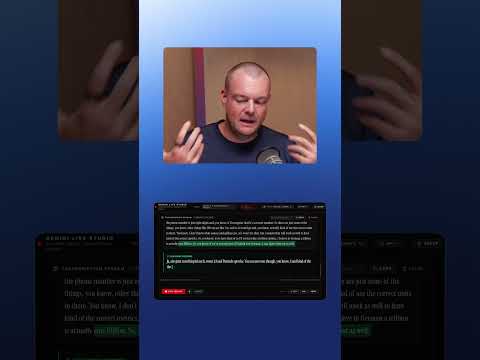 📺 Build voice-first apps with Gemini 3.5 Transcribe
Introducing Gemini Audio Transcription: Enhanced Accuracy for Numbers, Emails, and Multilingual Content
▼
This video introduces the first audio transcription model based on Gemini, available via the Interactions API and live transcription interface. It highlights significant improvements in accuracy for complex data types such as phone numbers, email addresses, and alphanumeric strings compared to standard models.
- Core Capabilities of Gemini Transcription
- High Accuracy for Structured Data (Emails and Phone Numbers)
- Multilingual Recognition Beyond Language Hints
- Availability via API and Live Interface
Viewers interested in leveraging large language models for precise audio-to-text conversion can learn about the technical advantages and deployment options for this new tool.
 📺 How to build with Gemini 3.5 Transcribe
Introducing Gemini 3.5 Transcribe: LLM-Based Transcription for Interactions and Live APIs
▼
Gemini 3.5 Transcribe, a new LLM-based transcription model, is now available on both the Interactions API and the Live API. It demonstrates improved accuracy for alphanumerics, email addresses, phone numbers, units, and multilingual speech.
■ Model overview and availability
- Available on Interactions API and Live API
- LLM-based approach for accurate transcription
■ Customization features
- Custom vocabulary for names and terms
- Language hints to improve accuracy
■ Demonstrated capabilities
- Email addresses, phone numbers, and unit conversions
- Automatic recognition of 70+ languages
Developers interested in real-time or high-accuracy transcription will learn about the model's features and how to apply them in their own applications.
 📺 Build a live translation broadcast app with the Gemini Live API and LiveKit
Real-Time Speech Translation with Gemini 3.5 and Next.js
▼
This content demonstrates how to build a real-time speech translation application using the new Gemini 3.5 model via its API, integrated with LifeKit and Google Cloud Run.
It covers the technical implementation of managing multiple language sessions efficiently, utilizing Next.js for the frontend, WebRTC for audio streaming, and long-running web sockets on Google Cloud Run.
The source code is open-source and available on GitHub, providing developers with a practical example for implementing multi-language voice translation services.
📄 このページの紹介文は AI が独自に生成したものであり、著作権をはじめとする他者の権利(商標権・名誉権・プライバシー等)を侵害しないよう配慮しています。動画の著作権は各作成者に帰属します。